

Disability Inclusion
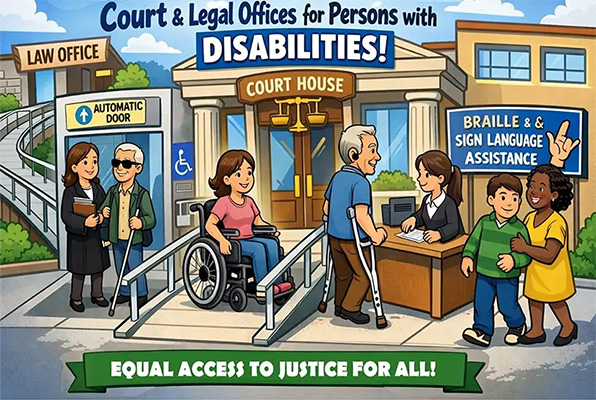
Disability inclusion in South Sudan is heavily hindered by deep-seated social stigma, lack of accessible infrastructure, and limited resources, limited access to humanitarian protection services, livelihood support and emergency assistance and low participation in decision-making. While the government’s 2023 ratification of the Convention on the Rights of Persons with Disabilities (CRPD) marked progress, implementation challenges persist, and disability remains underrepresented in national policies, humanitarian programming and coordination.
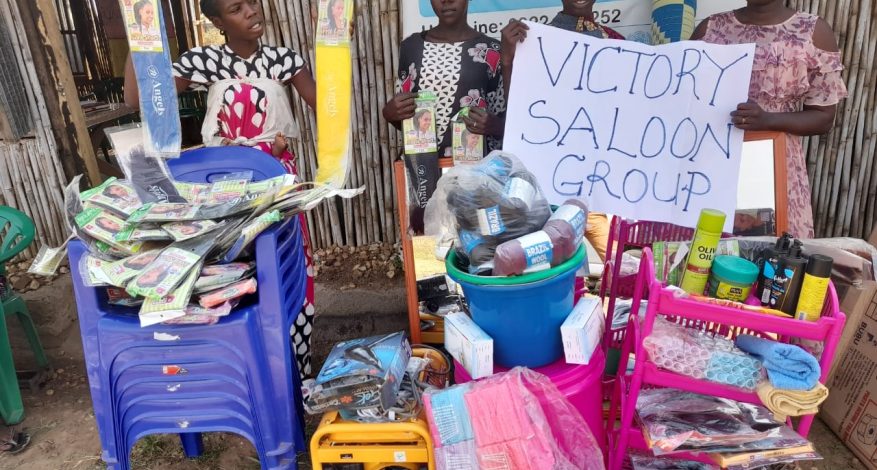
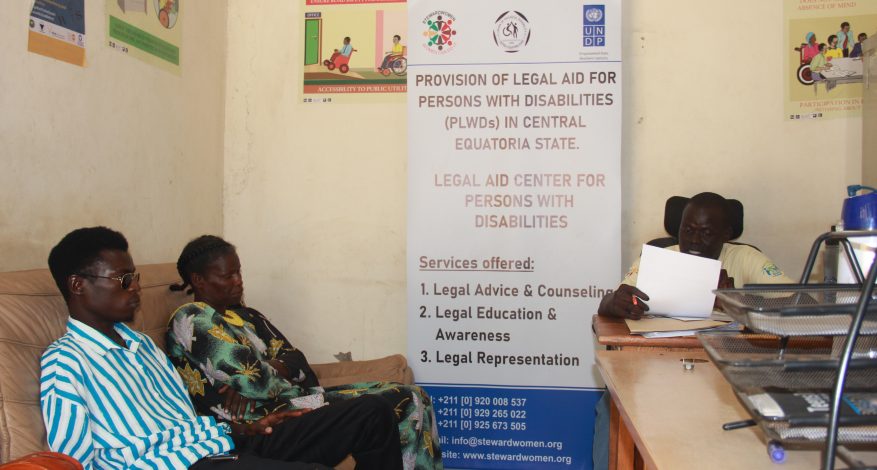
Our strategies for advancing disability inclusion focus on strengthening legal frameworks, empowering Organizations of Persons with Disabilities, advocating for implementation of inclusive humanitarian action, tackling deeply rooted stigma, provision of free legal aid services and creating economic opportunities for persons with disabilities.

Sexual and Reproductive Health Rights- SRHR
South Sudan has the world’s worst SRH indicators- 789 deaths per 100,000 live births; it has one of the highest maternal mortality ratios (MMR) in the world; with the contraceptive prevalence rate (CPR) of 4.7%, with only 1.7% of women using modern family planning methods. Young people’s comprehensive knowledge about SRHR is extremely low [https://en.unesco.org/news/sexuality-education-youth-south-sudan-strengthened]. Adolescent girls, especially those from rural and pastoral settings face diverse SRH challenges. Menstruation is surrounded by divergent religious beliefs and cultural perceptions that impact negatively on menstrual health management (MHM) practices. There is inadequate information and guidance on menses. There is lack of robust policy and strategy by local governments on MHM.
Response Plan: Inclusive SRHR Movement
Our response will focus on adolescent sexual and reproductive health (ASRH) as a driving force for the SRHR movement building. A strong and winning ASRH movement, including movements for marginalized and sexually orientated minority groups in South Sudan is needed. It requires building an ecosystem of groups that are strong and healthy — groups that are on the ground for the long tussle. We believe in creating smaller ASRH and/or SRHR “working groups or networks” based on expertise, with a well-defined mission and purpose that will propel the SRHR movement. These shall be community-based ASRH and/or SRHR support groups/networks for tracking, referral and reporting. These groups will keep individuals plunged into the ASRH and/or SRHR movement. Women & youth-led CBOs, including individuals will be the main targets. There will be a well- defined group leadership structure for feedback, dispute resolution and strategic direction. Civic engagement of SRHR stake holders for synergy and collaboration through dialogues, round table meetings etc. are significant. The online social media platforms- Facebook, WhatsApp, Google group etc. will also be used to build the SRHR momentum. The “public space” approach, where SRHR advocates grab existing opportunities- public events or spaces- will also be adopted. There shall be media campaigns on SRHR and production of IEC materials. CSOs will be trained on mainstreaming SRHR into their programs. We shall reconstitute the MHM coalition to review its strategy, aimed at setting-up inclusive SRHR coalition. The SRHR coalition will adopt the “thematic SRHR working group” system for advocacy, based on expertise. There shall be terms of reference for the SRHR working groups to roll-out the SRHR movement strategy.

Trafficking in Person (TIP).
South Sudan is a country of origin and destination for TIP- forced recruitment into armed forces, forced marriage, domestic servitude, and sexual exploitation, as well as labor exploitation. The traffickers are both South Sudanese and foreign businesspeople, with fraudulent offers of employment opportunities in hotels, restaurants, and construction, and forced labor or sex trafficking. The victims of TIP are mainly from the neighboring countries –Democratic Republic of the Congo, Eritrea, Ethiopia, Kenya and Uganda – as well as South Sudanese women and children. Juba, the capital city and Nimule on the border with Uganda are the hot spots for traffickers. Migrants to South Sudan face a lot of problems at entry points because most of them are lured to travel without the required documents with promises of getting better jobs. When some of these irregular migrants reach their destinations, life becomes contrary to what they were promised and they become victims of trafficking. East African migrants transiting through South Sudan to North Africa remain vulnerable to forced labor and sex trafficking. Traffickers exploit individuals along the country’s borders with Uganda and Kenya where economic activities are concentrated, as well as in artisanal mining operations along South Sudan’s border with DRC. South Sudan also ranks the 5th globally in child and forced marriage, with families forcing some girls into marriages as compensation for inter-ethnic killings; husbands and their families may subsequently subject these girls to sex trafficking or domestic servitude. The continued violent conflicts in the country have increased the risk of trafficking and sexual exploitation among the displaced communities, due to sometimes limited access to formal justice and support networks. Unaccompanied minors in the IDP and refugee camps are particularly vulnerable to trafficking. Inter-ethnic abductions, as well as abductions by criminals and armed groups are common in the country. (https://www.state.gov/reports/2023-trafficking-in-persons-report/south-sudan/)
Response Plan: TIP Prevention, prosecution & Protection
Our response will focus on enhancing prevention of TIP through identification and documentation of victims of trafficking (especially at the points of entry) and provision of care and support (including case management, PSS) to victims of trafficking. STEWARDWOMEN will provide support towards drafting and implementation of victim identification screening and referral procedures. Community sensitization on human trafficking will be a key area of focus, with the view to build community capacities to lobby for the development and enforcement of appropriate policies towards the prevention of trafficking, improved identification of victims, increased support to survivors and ending impunity. Training for TIP stake-holders (police, community leaders, social workers, NGOs etc.) to identify trafficking victims, particularly among vulnerable groups such as children, individuals in commercial sex, and IDPs will be crucial to our programming. We shall also provide capacity building support to law enforcement officers, prosecutors, and judges – including officials serving on the GBV and Juvenile Courts – on the 2008 Child Act, 2008 Penal Code, and 2018 Labor Act. We shall further support government efforts to investigate and prosecute suspected traffickers, including complicit government officials. The review of the 2008 Penal Code will also be supported, or a comprehensive anti-trafficking legislation to criminalize adult sex trafficking, with stringent penalties commensurate to other grave crimes, such as rape. The government will also be supported to accede to the UN Convention Against Transnational Organized Crime and its TIP Protocol. We shall lobby the government to cease all unlawful recruitment or use of children by the army (and associated militias), and to immediately demobilize all child soldiers under the command or influence of government forces and affiliated militias, and provide adequate protection and reintegration support to demobilized child soldiers.

Women, Peace & Security (WPS)
Violence against women and girls is devastating; and women and girls in South Sudan experience violence throughout their lives, both as a result of the decades of conflict that the country has endured, but also due to the patriarchal norms and practices that treat women and girls as property that can be exchanged for other forms of property such as cattle, and whose ownership infers absolute power over their reproductive choices, their ability to study and work, and their physical and sexual integrity. Women and girls in the country experience all forms of violence- conflict-related and non-partner sexual violence, exacerbated during times of conflict. On the other hand, Gender Based Violence (GBV) is one of the most critical threats to the protection and wellbeing of women and children in South Sudan. GBV was already rife before the conflict, and is now nearing epidemic proportions. Studies indicate that some 65% of women and girls have experienced physical and/or sexual violence in their lifetime, and some 51% have suffered intimate partner violence (IPV). Some 33% of women have experienced sexual violence from a non-partner, primarily during attacks or cattle raids and during displacement. The majority of girls and women experience sexual violence for the first time under the age of 18. Children comprise around 25% of all reported cases of conflict-related sexual violence.
Response Plan
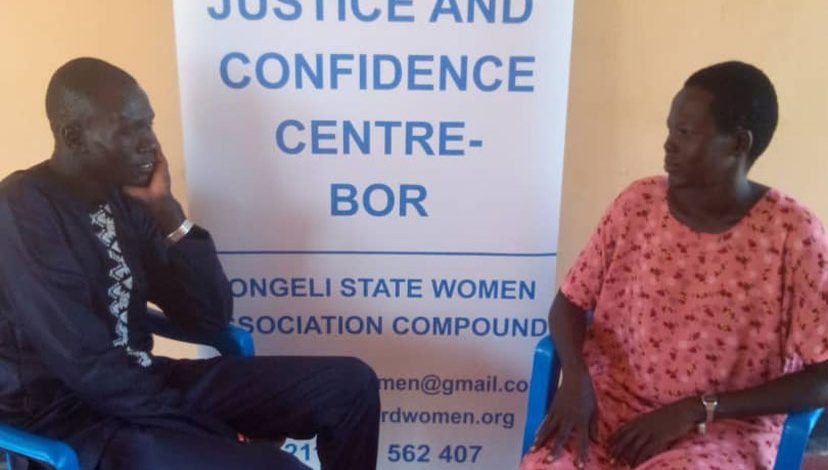
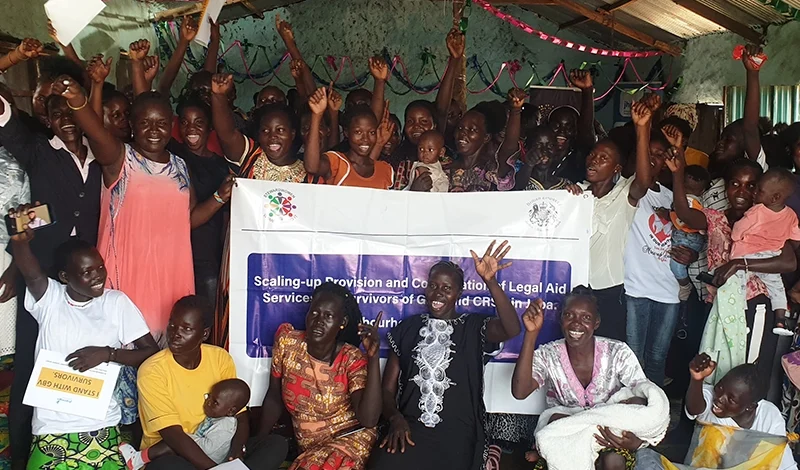
Our response will focus on Ending Violence against Women and Girls (EVAWG), including Sexual Violence and Conflict Related Sexual Violence (CRSV); GBV prevention, risk mitigation and response services in a coordinated manner with GBV partners. The GBV prevention priorities include community engagement, awareness-raising activities, and primary prevention programs that transform harmful social norms contributing to gender inequality. GBV risk mitigation interventions will focus on integrating survivor support across all programs, dignity kit programming, and conducting safety audits. The GBV response priority interventions include providing psychosocial support, GBV case management services, establishing and strengthening GBV referral systems, implementing Women and Girls Friendly Space (WGFS) programming, establishing and operationalizing safe houses, and providing capacity building training to support groups; engagements between the military and civilians in the prevention and response to SGBV & CRSV to build trust and confidence between them to effectively address impunity and promote accountability for survivors. However, special consideration will be given to the provision of legal services to survivors through legal aid clinics and/or justice and confidence centers, mobile courts, legal aid camps, and providing capacity building training to primary justice providers and other support groups in the rural areas. We shall continue to mobilize CSOs through coalition building, networking, and collaboration to advocate for the development of the necessary legislation policies, and reforms on the human rights of women and girls, including those related to marriage and succession rights. Particular urgency will be given to addressing the needs of adolescent girls and gender inequality.
Mental health and psychosocial support (MHPSS)
Displaced women in South Sudan face severe mental health and psychosocial support (MHPSS) challenges, driven by chronic conflict, gender-based violence (GBV), extreme poverty, and family separation, leading to high rates of PTSD and depression. Cultural stigma, limited specialized services, and reliance on overstretched community networks hinder access to care.
Response Plan
Our response will focus on establishing safe, women-only spaces and peer support groups to provide protection and psychosocial education and counselling support to reduce stigma, organizing groups that allow women to discuss common issues, such as trauma, loss, and the challenges of displacement, reducing stigma and fostering solidarity, storytelling, singing, and drama to address trauma, and raise awareness about Sexual and Gender-Based Violence, sports and Play-Based Activities to help women and girls regain confidence, heal from trauma, and foster social cohesion and Integrating mental health support with general health services to make it less stigmatizing and more accessible to women and girls.
Armed Conflict and Insecurity
More than 75% of South Sudan is reportedly engulfed in murderous violence at the local level. The country has experienced some of the most brutal attacks over the past seven years, mainly in the states of Central Equatoria, Unity, Upper Nile, Warrap, Jonglei and the Greater Pibor and Rweng Administrative Areas. In some of these areas, homes have been systematically and deliberately torched, murders and forced displacements have been perpetrated, and women and girls have been abducted- they have been raped and gang-raped, sexually enslaved, and in some instances forcibly married off to their captors. Abducted boys have been forced to fight. The conflicts are driven by competition for power and territory, land and property as well as access to oil and other resources and the fight for political power, resulting in gross violations of human rights.
Response Plan: Inclusion of Women in Leadership and Peace Processes
Women inclusion in peace processes will be the focus of our intervention. Housing, Land and Property programming to support HLP concerns will be an essential component of conflict-prevention and the establishment of rule of law. Equitable access to HLP will be strengthened, encouraging the resolution of inter-communal land and resource conflicts rooted in access, ownership and usage of HLP. The realization of women’s HLP rights will be of particular focus, including access to ownership of land. HLP activities will focus on strengthening community-based dispute resolution mechanisms, promoting legal awareness-raising, and providing legal support, counseling and legal aid, particularly for women and girls. These activities are aimed at creating a conducive environment for returns and include responses to HLP issues that provide equal rights and responsibilities to men and women, mitigating the potential for returns to exacerbate tensions over scarce resources. It also establishes mechanisms to identify legal and/or community-based solutions to resolve HLP disputes.
- 1
- 2